Customer case stories 18.05.2026
Halmstad Energi och Miljö changed from on-premises to SaaS to save time and effort
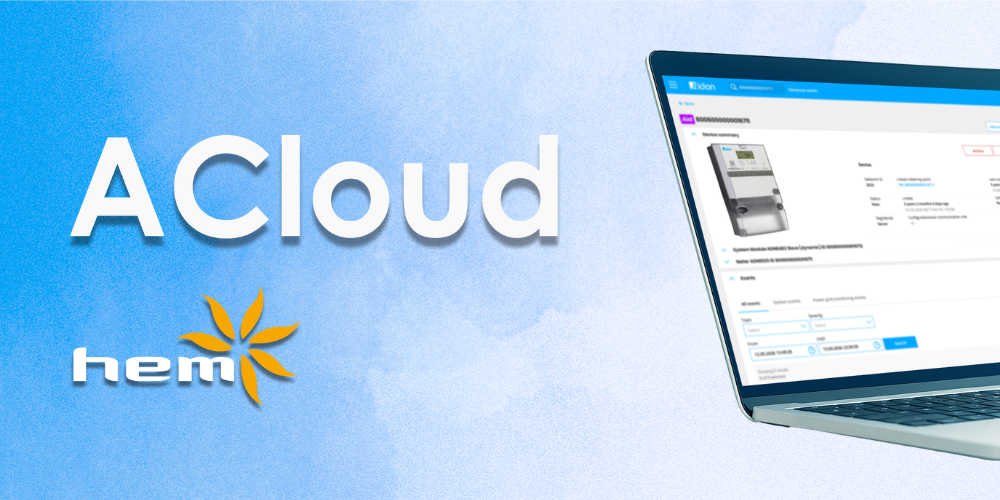
Halmstad Energi och Miljö (HEM) decided to outsource the hosting of their metering head‑end system to Aidon. While the change had no impact on the daily work of the metering team, it significantly reduced the workload of the IT department.
Halmstad Energi och Miljö chose Aidon as the provider of their current metering system in 2021. Today, the system serves approximately 42,000 electricity meters and 4,000 district heat meters.
The company is satisfied with the system’s performance: the meter value collection availability (SLA) is consistently higher than 99.95 %.
After operating the metering head-end system on their own servers for a couple of years, HEM decided to move to Aidon ACloud. The migration work to SaaS was managed by Aidon together with HEM resources in fall 2025.
ACloud is a SaaS solution based on the Aidon Gateware head-end system and is delivered from a hosted environment fully managed by Aidon. With ACloud, Aidon is responsible for system hosting, maintenance, and security updates.
For HEM, there were two main drivers behind the decision. First, maintaining dozens of operational and business-critical systems creates a heavy workload for HEM’s IT department. In practise, the IT department had to enable Octopus Deploy for the head-end system updates which took them a couple of hours work each month. With outsourcing the Aidon head-end system this time is saved.
Secondly, the move to SaaS was motivated by NIS2 requirements which became effective in Sweden in January 2026. With the system delivered as a managed service, Aidon handles core NIS2-related responsibilities, including security patching, monitoring, and operational resilience. This reduces the internal compliance workload of HEM.
– In day‑to‑day metering operations, we don’t really see a difference between on‑premises and SaaS. The real benefit is for IT: removing monthly patching and maintenance tasks freed up time they simply didn’t have, says Naim Simsek, metering data administrator at HEM.

